Quick answer: The biggest Korean companies in Georgia are Hyundai Motor Group Metaplant America and its battery joint venture with LG Energy Solution near Savannah, Kia Georgia in West Point, SK Battery America in Commerce, and Hanwha Qcells in Dalton and Cartersville. Each site hires for production, maintenance, quality, engineering, EHS, supply chain, and HR/admin roles, and many suppliers nearby hire too. Apply through each company’s own careers page first, then check supplier openings in the same county.
Drive I-16 west out of Savannah, I-85 down to West Point, or I-85 north toward Commerce, and you will pass the plants of the biggest Korean companies in Georgia, some of the largest Korean-affiliated factories in North America. Georgia has become one of the main places Korean manufacturers build in the U.S. That means steady openings for people who know where to look and how these employers hire.
This guide covers the major Korean companies in Georgia, the kinds of jobs they post, where to apply, and what to expect in each region.
Key takeaways
- Korean companies in Georgia cluster in four regions: Savannah, West Point, Commerce, and northwest Georgia.
- One anchor plant usually brings several Korean suppliers within a short drive.
- Maintenance, controls, and quality skills are in steady demand across the state.
- Battery and EV sites move with the market, so read recent news before you resign anywhere.
- Suppliers to Korean companies in Georgia often hire faster than the anchor plants.
Why there are so many Korean companies in Georgia
It started with Kia. The automaker began production at its first U.S. plant in West Point on November 16, 2009, and suppliers followed it into west Georgia. Over the next fifteen years, the list of Korean companies in Georgia grew to include battery, solar, and EV plants, plus a long list of parts makers around them.
For job seekers, the takeaway is simple. One large plant usually brings several smaller Korean suppliers within a short drive. If the main employer is not hiring for your role this month, a supplier down the road may be.
If you want the bigger picture on how the large groups recruit across the country, read our guide to how Samsung, LG, Hyundai, and SK hire in the U.S.
The major Korean companies in Georgia
Hyundai Motor Group Metaplant America (Bryan County, near Savannah)
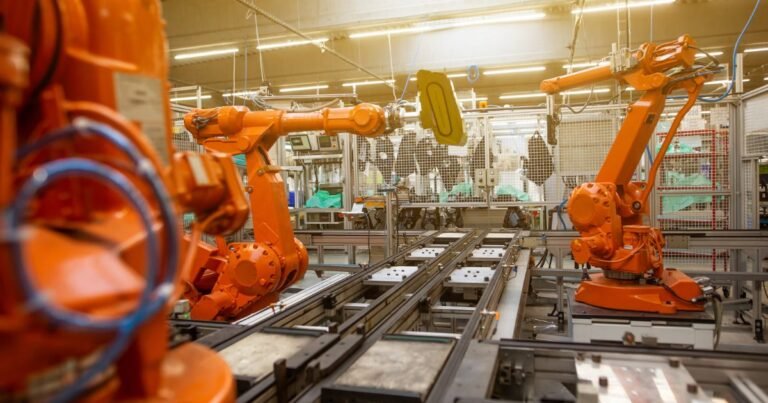
HMGMA sits in Ellabell, Bryan County, about 25 miles west of Savannah along I-16. Full production started in October 2024, beginning with the Hyundai Ioniq 5. It is a large, highly automated EV plant, so it hires heavily for maintenance technicians, robotics and controls people, and quality roles alongside production team members.
The Metaplant is not one company. Several Hyundai affiliates operate on or around the campus, including Hyundai Mobis, Hyundai Glovis, Hyundai Transys, Hyundai Steel, and others. Each one posts its own jobs, so search them individually.
HL-GA Battery Company (Hyundai and LG Energy Solution)
Hyundai and LG Energy Solution are building a battery joint venture at a site in Bryan County. According to the Governor’s office, the JV represents more than $4.3 billion in investment and is planned at 30 GWh of capacity. The combined Metaplant and battery projects were announced with a goal of 8,500 jobs over several years.
In September 2025, a federal immigration enforcement operation at the battery plant construction site became national news and delayed the project. Construction has since resumed, and Korean-language and regional press have reported that Korean companies in Georgia are leaning more on local recruiting. For U.S.-based candidates with the right technical skills, that shift matters.
Kia Georgia (West Point)
Kia’s plant in West Point, Troup County, is the most established Korean auto site in the state. At launch, Kia announced a $1 billion investment, about 2,500 plant jobs, and thousands more at suppliers in the region. Because it has run for over fifteen years, Kia Georgia tends to have more mature processes and a deeper bench of experienced staff, which can mean more structured career paths.
SK Battery America (Commerce)
SK Battery America runs EV battery plants in Commerce, Jackson County, northeast of Atlanta. Be aware that hiring here has moved with the EV market. In March 2026, Global Atlanta reported that the company laid off 958 employees at Commerce, with roughly 1,600 remaining. Openings still appear, but research the current situation before you resign from a stable job to join.
Hanwha Qcells (Dalton and Cartersville)
Qcells, part of the Hanwha group, makes solar panels in Dalton and announced a large expansion in 2023: more than $2.5 billion and about 2,500 new jobs, including a new Cartersville facility producing ingots, wafers, cells, and panels. That makes northwest Georgia a real option for manufacturing, process engineering, and quality candidates.
Hyundai Mobis and the supplier network
Hyundai Mobis has a plant in Richmond Hill, Bryan County, making EV power electronics, and dozens of Korean and global suppliers sit around both the Savannah and West Point sites. These companies often have smaller HR teams and move faster. They are also where bilingual coordinators and generalists frequently get their start.
Georgia sites at a glance
| Employer | Location | What they make | Region |
|---|---|---|---|
| Hyundai Motor Group Metaplant America | Ellabell, Bryan County | EVs and hybrids | Savannah / Coastal |
| HL-GA Battery Company (Hyundai and LGES) | Bryan County | EV battery cells | Savannah / Coastal |
| Hyundai Mobis | Richmond Hill, Bryan County | EV power electronics, modules | Savannah / Coastal |
| Kia Georgia | West Point, Troup County | Vehicles (SUVs, EVs) | West Point / LaGrange |
| SK Battery America | Commerce, Jackson County | EV batteries | Northeast GA |
| Hanwha Qcells | Dalton and Cartersville | Solar ingots, wafers, cells, panels | Northwest GA |
What kinds of jobs they hire for
Job titles vary, but most postings at Korean companies in Georgia fall into a handful of buckets:
- Production and assembly: team members, team leads, group leaders. Often the largest hiring volume, especially near launch.
- Maintenance: electrical and mechanical technicians, PLC and robotics specialists. Consistently in demand at automated plants.
- Quality: inspectors, quality engineers, supplier quality. IATF 16949 experience helps in auto.
- Engineering: process, manufacturing, equipment, and battery cell engineers.
- EHS: safety specialists and environmental compliance staff.
- Supply chain and logistics: purchasing, production control, warehouse, import/export.
- HR, finance, and admin: recruiters, HR generalists, accountants, general affairs.
- Bilingual coordinators: Korean–English roles that bridge U.S. teams and Korean expat managers or headquarters.
If you speak Korean, even at a working level, say so clearly on your application. Our post on how to list Korean on your resume explains how to describe your level honestly.
Georgia never really slows down. Between the battery plants, the auto plants, robotics companies, and the long list of suppliers that follow them, Georgia is one of the two busiest markets I see for Korean company hiring. Texas is the other.
For candidates, that means options. If the anchor plant you want is not hiring for your role right now, a supplier nearby very often is, and supplier experience on a Korean production line carries real weight when the bigger plants open new positions.
Where to apply to Korean companies in Georgia
Start with the source. Company careers sites usually post first and give you the most accurate job descriptions. HMGMA, for example, runs its own portal at careers-americas.hyundai.com/hmgma, and affiliates like Mobis and Glovis have separate listings.
- Company careers pages: check each affiliate separately, not just the parent brand.
- LinkedIn and Indeed: set alerts by company name and by county.
- Georgia Quick Start: the state’s workforce training program has partnered with major plants, including HMGMA, on pre-employment training.
- Local job fairs: suppliers often recruit through county and technical college events.
- Recruiters who work with Korean companies: useful for salaried and bilingual roles that are not always posted publicly.
Want a head start on the interview once you get the call? Get the free Korean Company Interview Playbook with sample questions and answer frameworks.
Tips for each region
Savannah and the coast
This is the busiest area for Korean companies in Georgia right now. Housing near Richmond Hill, Pooler, and Statesboro has gotten more competitive, so factor commute and rent into any offer. Maintenance and controls candidates have the strongest leverage here. Port logistics experience is also a plus, since Savannah’s port connects directly to these plants.
West Point and LaGrange
The Kia corridor is mature, with many established suppliers between LaGrange, West Point, and the Alabama line. Some people live in Columbus or even Auburn, Alabama and commute. Because the network has been here a long time, internal transfers between suppliers are common, and experience at one helps at the next.
Commerce and northeast Georgia
Commerce is within reach of Athens and the northern Atlanta suburbs, which widens your housing options. Ask direct questions in interviews about production volume and team stability given recent changes in the EV market. Battery experience gained here transfers well to other battery projects around the country.
Northwest Georgia
Dalton and Cartersville sit along I-75 between Atlanta and Chattanooga. Dalton has a long manufacturing history, so experienced plant workers are already in the area. Solar manufacturing is closer to semiconductor processes than auto assembly, so mention any cleanroom, wafer, or process-control experience you have.
How to stand out as an applicant
Korean companies in Georgia often value reliability, safety awareness, and willingness to work flexible schedules during ramp-up. Practices vary by company and team, but a few things help almost everywhere:
- Name the exact equipment, PLCs, or systems you have used.
- Show safety results, not just safety training.
- Be ready to explain why you want this plant and this region.
- Answer overtime and shift questions honestly and specifically.
Our full guide on how to pass a Korean company interview walks through what hiring managers listen for.
FAQ
Do I need to speak Korean to work at these plants?
No. Most production, maintenance, and engineering roles at Korean companies in Georgia are English-only. Korean helps for coordinator, purchasing, and some management roles that work closely with headquarters.
Which Georgia site is hiring the most?
It changes with production schedules and the EV market. The Savannah-area Hyundai cluster has been the most active in recent years, but check current postings rather than relying on old announcements.
Should I apply to suppliers or the main plant?
Both. Suppliers often hire faster and give you broader responsibility early, which can make you a stronger candidate for the main plant later.
Are these jobs stable?
Established auto plants have long track records. Newer battery and EV sites can be more sensitive to market shifts, so ask about volume plans and read recent local news before accepting.
Korean companies in Georgia give you real choices: four distinct regions, several industries, and a deep supplier base. Pick the region that fits your life, target both the anchor plant and its suppliers, and walk into the interview knowing why you chose them.

Related reads
Most-read guides on GRYNDHAUS
Readers who found this useful went on to these next.
 InterviewKorean Company Interview Questions: 30 Answers & Full Guide
 SalaryKorean Company Salary Negotiation: Scripts & Full 2026 Guide
 Pay rulesExempt vs Non-Exempt: Overtime Rules, Pay & Full 2026 Guide
 TexasKorean Companies in Texas: Samsung, Jobs & Full 2026 Guide
 GeorgiaKorean Companies in Georgia: Plants, Jobs & Full 2026 Guide
 CultureKorean Work Culture: Hierarchy, Reporting & 7 Rules Guide
Free tool: Cost of Living by State Calculator. Run your own numbers in a minute.