
Quick answer: A direct hire (FTE) is employed by the company itself, while a contractor is usually employed by a staffing agency or works as a self-employed 1099 contractor. Contract roles can start faster and sometimes pay more per hour, but benefits and job security vary widely. Before signing, confirm who your legal employer is, what benefits you get, and what happens when the project ends.
At Korean plants in the U.S., two people can work the same line under the same manager and have very different pay, benefits, and security, just because of who employs them. Neither path is automatically better. Here is how to tell them apart and what to ask before you sign.
Key takeaways
- Contract vs direct hire is really a question of who your legal employer is.
- A W-2 agency contractor and a 1099 contractor are very different deals.
- Compare total compensation, not just the hourly rate.
- Contract-to-hire can be a real path to a full-time job, but conversion is rarely guaranteed.
- Ask what happens to your role when the project ends, and get it in writing.
Why contract roles are so common at Korean plants
Korean battery, semiconductor, and auto plants move through intense phases: construction, equipment installation, ramp-up, then steady production. Headcount needs swing between those phases, and approved FTE headcount may be limited by budgets set at headquarters.
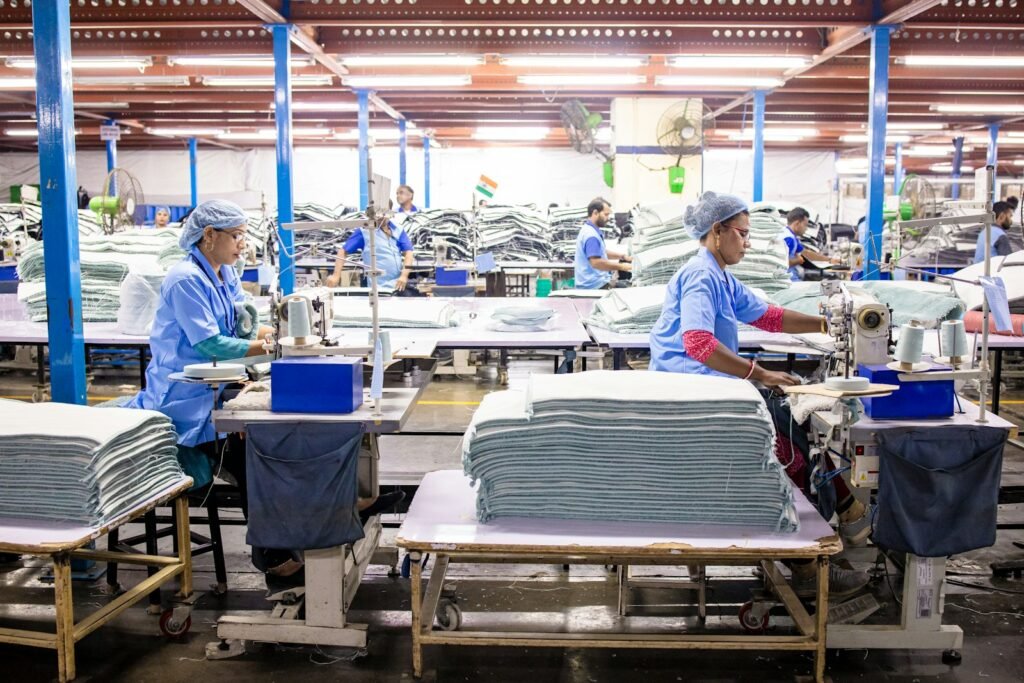
Contract staff fill the gap, especially in equipment setup, commissioning, quality, safety, interpretation, and project coordination. Some roles last for years; others disappear when the project closes. For where these plants are, see Samsung, LG, Hyundai, and SK hiring in the U.S.
The main work arrangements
- Direct hire (FTE): you are on the company’s payroll, in its benefit plans, and covered by its policies, even if a staffing firm found you.
- W-2 contractor through an agency: you work at the client’s site, but the agency is your employer of record. It pays you, withholds taxes, and provides its own benefits. This is the most common setup at large plants.
- 1099 independent contractor: you are self-employed, pay both halves of Social Security and Medicare taxes, buy your own insurance, and generally have no overtime protection.
- Contract-to-hire: you start as an agency contractor with a possible conversion to FTE later. It works like an extended trial for both sides.
On 1099 work, the U.S. Department of Labor explains that labeling someone a contractor does not make them one; what matters is the economic reality of the relationship. This is not legal advice.
| Factor | Direct hire (FTE) | W-2 agency contractor | 1099 contractor |
|---|---|---|---|
| Legal employer | The company | The staffing agency | You |
| Pay structure | Salary or hourly, with raises and bonuses | Hourly, sometimes higher than FTE base | Negotiated rate, no withholding |
| Health insurance | Company plan | Agency plan, coverage level varies | You buy your own |
| Retirement, PTO | Company 401(k), paid leave | Varies by agency, sometimes limited | None provided |
| Overtime | Depends on exempt status | Usually non-exempt, paid hourly | Generally not covered |
| Job security | Tied to company performance | Often tied to a project or contract | Tied to each engagement |
| Speed to start | Slower, more approvals | Often faster | Often fastest |
Benefits and insurance: where offers quietly diverge
The hourly rate is the easy part. Benefits are where the real gap shows up.
Under the Affordable Care Act, larger employers, which can include staffing agencies, generally must offer affordable health coverage to full-time employees or face a tax penalty, as the IRS explains. But “offering coverage” can mean very different plans, premiums, and deductibles.
Also check:
- When coverage starts, since some plans have a waiting period
- Dental, vision, life, and disability insurance
- Paid time off and holidays (some contract roles pay only for hours worked)
- Retirement plan access and any employer match
- Per diem or travel pay if the site is far from home
Contract can be a real path to full-time. A physical security project manager I placed started on a contract. His performance stood out, and he was converted to a full-time employee within a year.
Some large companies only offer one-year contracts that get renewed. That’s company policy, not a sign you’re doing badly.
Safety managers worry the most because their roles are project-based. What I tell them: projects run until the plant is built and producing, and a plant still needs safety managers after it opens. Perform well and you stay in demand.
“How much will health insurance eat out of my hourly rate?”
For a contractor without an employer plan, premiums come straight out of the hourly rate. The IRS notes that expanded premium tax credit eligibility was temporary for tax years 2021 through 2025, and that the general rule limits the credit to households at no more than 400 percent of the federal poverty line (IRS Premium Tax Credit Q&A).
On timing, HealthCare.gov says that if you lose job-based coverage, you need to apply for Marketplace coverage within 60 days. Ask the agency: “Do you offer a medical plan, when does it start, and what will it cost me each month?”
When the project ends, or converts
Many contract roles at Korean plants are tied to a phase: building a line, installing equipment, or supporting a launch. That can be great experience. The risk is that when the phase ends, so can the job. Some FTE roles created for one project carry the same risk.
So the smarter question is “what is this role tied to?” Ask how long the assignment should last, whether there is a plan for the next phase, and how much notice you will get if it ends early.
For contract-to-hire, conversion usually depends on your performance, available headcount, and company approval, which at Korean companies may include sign-off from senior leaders or HQ. Ask how many contractors in similar roles have converted recently and whether the FTE salary has been discussed. Showing stability and teamwork matters here, just as it does in a Korean company interview.
10 questions to ask before you sign
- Who is my legal employer, and who issues my paycheck?
- Am I a W-2 employee or a 1099 contractor?
- Is this role tied to a specific project or contract?
- How long is the assignment expected to last?
- What health plan is offered, when does it start, and how much do I pay?
- Are disability and life insurance included?
- Do I get paid time off and holidays?
- Is overtime paid, and at what rate?
- If this is contract-to-hire, when and how is conversion decided?
- How much notice will I get if the assignment ends early?
If answers on employer of record or insurance are vague, slow down. To compare an hourly contract rate with a salaried offer, I cover the math in exempt vs non-exempt overtime, and how to ask for more in the salary negotiation guide.
How to choose
A contract role often makes sense if you want to get inside a company quickly, you are between jobs, or you want project experience at a new plant. A direct hire often makes sense if you need stable family benefits, a long-term path, or predictability during a move.
Build a simple comparison: annual pay at realistic hours, minus your share of premiums, plus the value of PTO and retirement match. Then add a column for “what happens if this ends early.” That last column often decides it.
FAQ
Does a contract role look bad on a resume?
Not usually, especially in manufacturing and plant startups. List it clearly, for example “Equipment Technician (contract via agency), client site,” so short stints do not look like job hopping.
Do contractors earn more than direct hires?
Sometimes per hour, but not always over a year once benefits, PTO, and gaps between assignments are counted. Compare total compensation.
Is contract-to-hire conversion guaranteed?
Rarely. It depends on performance, headcount, and approvals. Ask how often conversions have actually happened for similar roles.
Want the full list of questions for your final round and offer stage? Get the free Korean Company Interview Playbook.