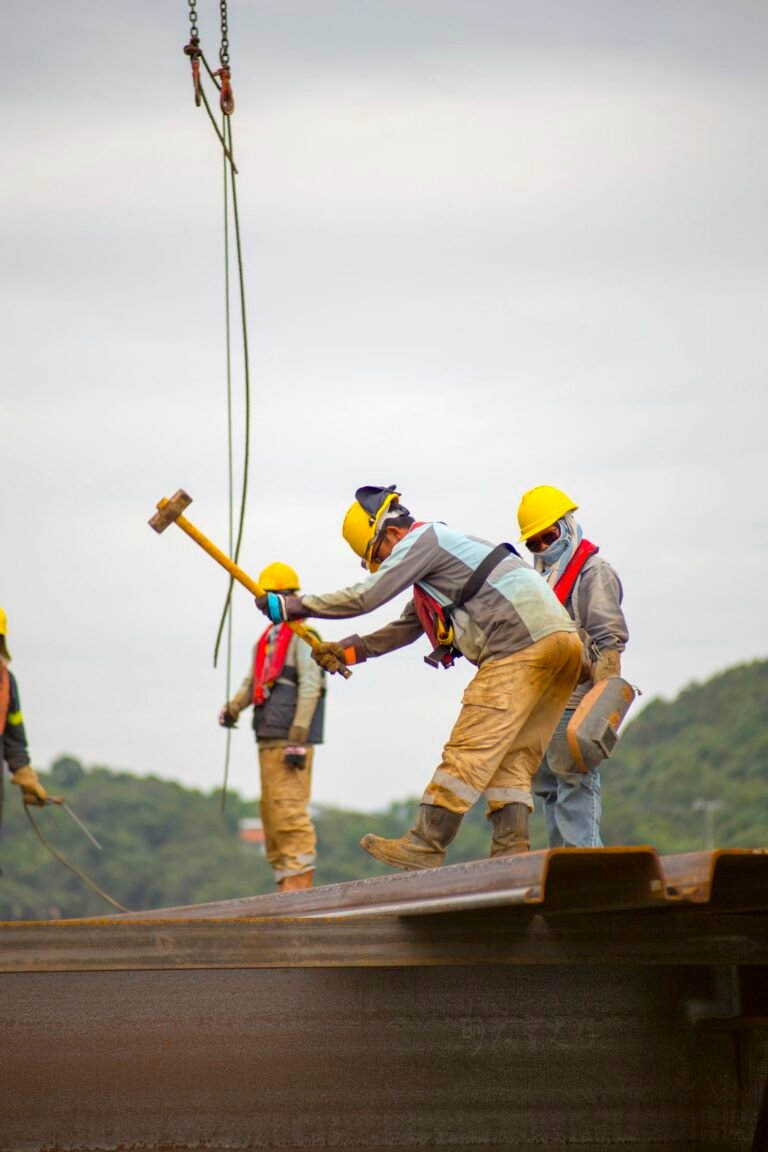
TL;DR: A construction safety manager runs the safety program on a job site: inspections, training, incident investigations and keeping every subcontractor on the plan. Most start in the trades or as safety coordinators, hold an OSHA 30 card, then add STSC, CHST and eventually CSP. BLS reports a median of $94,670 for safety specialists in construction (May 2025).
I place safety professionals on U.S. construction and battery plant projects, and I hold an OSHA 30 card myself. The question I hear most: “What do I actually need, and in what order?” Here is the short answer.
What a construction safety manager does
The job is to keep people alive and the project moving. On a typical day, that means:
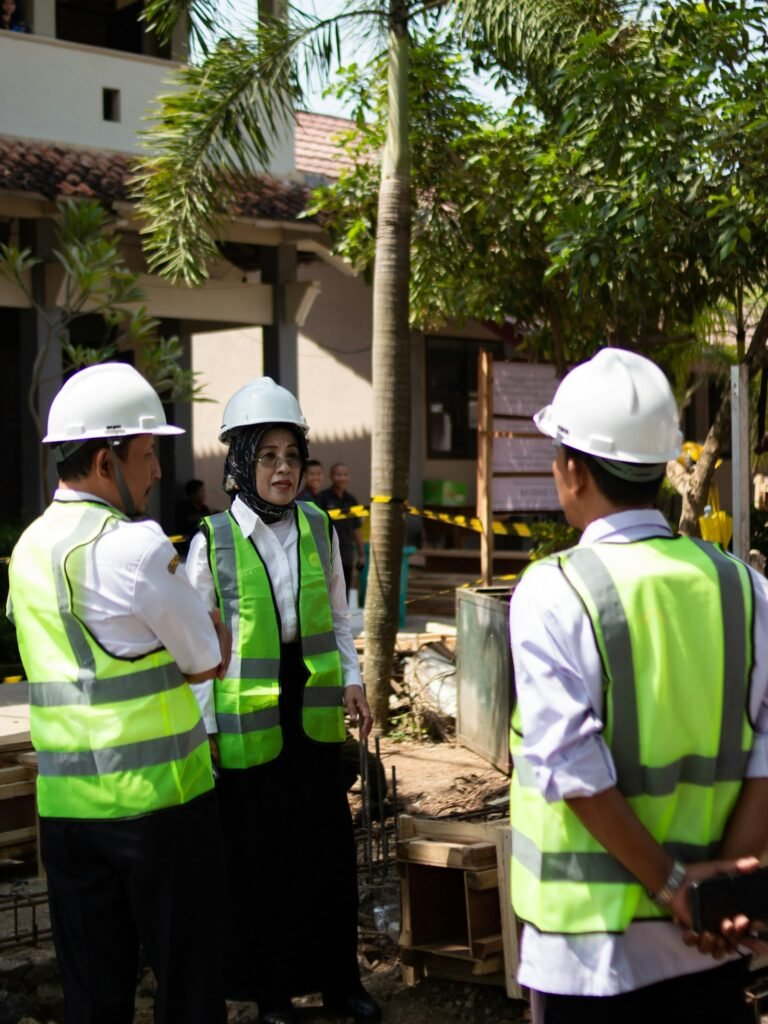
- Runs the site safety plan. Writes or adapts the site-specific plan and makes sure it matches OSHA standards and the owner’s rules.
- Walks the site every day. Fall protection, scaffolds, excavations, electrical, cranes and housekeeping.
- Trains people. New-hire orientation, toolbox talks and pre-task planning with foremen.
- Manages subcontractors. Reviews their safety programs, JHAs and certifications before they start work.
- Investigates incidents. Finds the root cause, writes the report and tracks corrective actions.
- Reports numbers. TRIR, DART, near misses and leading indicators for the project team and owner.
- Has stop-work authority, and uses it when needed.
The career ladder
| Level | Typical title | What hiring managers expect |
|---|---|---|
| 1 | Safety assistant, site safety rep | OSHA 30, field experience, strong communication |
| 2 | Safety coordinator, safety specialist | OSHA 30 plus STSC, 2+ years on site |
| 3 | Site safety manager | CHST or ASP, 5+ years, runs a site on their own |
| 4 | Senior safety manager, regional EHS manager | CSP, multi-site or large project experience |
| 5 | Safety director, EHS director | CSP, program building, executive reporting |
You do not need a degree to start. Many great safety managers came up through the trades. A bachelor’s degree only becomes important when you go for the ASP and CSP, which require one.
Certifications, in the order I recommend
- OSHA 30 Construction. The baseline for every safety and supervisor job. It is a DOL completion card, not a certification.
- STSC (Safety Trained Supervisor Construction). From BCSP. Needs 30 hours of safety training and 2 years of construction supervision (or 4 years of construction work).
- CHST (Construction Health and Safety Technician). From BCSP. Needs 3 years of construction safety experience.
- ASP, then CSP. From BCSP. Needs a bachelor’s degree. CSP is the credential most senior safety manager roles ask for.
- OSHA 510 and 500 (optional). Lets you teach OSHA 10 and 30 to crews. OSHA 500 requires 510 plus 5 years of construction safety experience.
Requirements and fees change, so always check BCSP and OSHA before you apply.
Pay
The U.S. Bureau of Labor Statistics reports a median annual wage of $90,150 for occupational health and safety specialists overall and $94,670 in construction (May 2025). It projects 18% job growth for specialists from 2025 to 2035, much faster than average.
Two things move your real pay more than the base number: overtime eligibility, and per diem or relocation on travel projects. Before you compare offers, read my exempt vs non-exempt guide.
Safety jobs at Korean battery and chip plant sites
Korean companies are building battery, semiconductor and EV plants in Georgia, Tennessee, Texas, Arizona, Michigan and Ohio. These are some of the largest construction sites in the country, and they hire safety staff through owners, EPC contractors and U.S. subcontractors. What these teams value:
- Experience coordinating safety across many subcontractors and shifts
- Clear daily and weekly reports a project team can share with headquarters
- Cleanroom, chemical, high-voltage or battery manufacturing exposure
- Korean is a plus, not a must. Be honest about your level.
Interview and resume prep
Expect these questions, and know what each one is really checking:
- “Walk me through how you ran safety on your largest site.” Scale: headcount, number of subcontractors, who you reported to.
- “Tell me about a stop-work decision you made.” Judgment under schedule pressure.
- “How do you get subcontractors to follow your program?” Influence without authority.
- “What were your TRIR and DART, and how did you move them?” Whether you manage with numbers.
On your resume, list credentials with issuer and year (OSHA 30-Hour Construction (DOL card, 2024), CHST, BCSP (2025)), put numbers on every role, and name the work types: steel erection, excavation, confined space, energized work, cleanroom.
FAQ
Can I become a construction safety manager without a degree?
Yes. Many start in the trades, get OSHA 30, then STSC and CHST, which do not require a degree. The ASP and CSP do require a bachelor’s degree.
Which certification matters most?
OSHA 30 gets you in the door. For safety manager roles, CHST is the strongest construction-specific credential, and CSP is what senior roles ask for.
Do I need to speak Korean to work at a Korean company site?
Usually no. Most safety roles run in English. Korean helps when you report to a Korean project team, so list your real level.
Study guides and code books on Amazon
Check the edition year before you buy. Exams and job sites go by the current edition.
- CHST exam study guide
- ASP exam study guide
- OSHA 29 CFR 1926 construction standards book
- Construction safety management book
As an Amazon Associate, GRYNDHAUS earns from qualifying purchases.