TL;DR: A document controller on a construction project makes sure everyone builds from the right revision. You number and register every drawing and document, issue transmittals, track submittals and RFIs, separate issued-for-review from issued-for-construction, and assemble as-builts and turnover packages at the end. No license is required; accuracy, system skills and a calm, consistent process are what get you hired.
I recruit for roles like this on U.S. fab and plant projects, and the document controller on a construction project is one of the roles hiring managers are pickiest about. They rarely say it out loud, but they have all lived through a crew building from a superseded drawing. Once that happens, a good document controller stops looking like an admin role and starts looking like risk control.
The people I see do well in this job are detail-driven, patient with repetitive work and firm about process, even with senior engineers. Many come from office administration, logistics, legal or records work, and the bilingual ones are in particular demand on projects where design teams sit in two countries. Here is what the job involves, the systems you’ll use, how the career grows and what “good” looks like on a semiconductor fab.
What a document controller on a construction project does
You own the official record of the project’s information. Engineers create drawings, specs and calculations; contractors create submittals and RFIs; vendors send equipment data. Your job is to make sure every one of those items has a unique number, a known revision, a status, and a record of who received it and when.
| Task | What you actually do | What goes wrong without it |
|---|---|---|
| Document numbering | Apply the project numbering scheme: project, area, discipline, document type, sequence | Two different sheets end up with the same number |
| Revision control | Check revision letters or numbers, revision clouds and the revision table before issue | Crews build from a superseded sheet |
| Transmittals | Issue documents with a transmittal stating purpose, revision and recipients | No proof of who received what, and when |
| Document register | Keep the master list of every document, current revision and status | Nobody knows which version is current |
| Submittal register | Log each submittal, its review status and return date | Equipment is ordered against an unapproved document |
| RFI register | Log RFIs, responses and any attached sketches or revised sheets | An RFI answer never makes it into the drawings |
| As-builts and turnover | Collect redlines, record drawings, O&M manuals and test records for handover | The owner receives an incomplete turnover package |
A numbering scheme usually strings together codes for the project, building or area, discipline, document type and a sequence number, so a structural foundation plan and a fire alarm riser diagram can never be confused. The exact format comes from the project’s document control procedure. Your job is to enforce it on every file, including vendor documents that arrive with the vendor’s own numbers. On a big project, that one habit prevents a surprising amount of rework.
Issue statuses: IFR, IFA, IFC and as-built
Every project defines its own status codes in a document control procedure, but these are the ones I see most often in job descriptions and interviews. Learn them cold.
- Issued for Review (IFR): shared so others can comment. Nobody builds from it.
- Issued for Approval (IFA): sent to the owner or reviewer for formal sign-off.
- Issued for Bid or Pricing: used for contractor pricing, not construction.
- Issued for Construction (IFC): the version crews build from. This is the status that carries the most risk if it is wrong.
- Superseded or Void: replaced or cancelled, kept for history but clearly marked.
- As-built or Record: updated after construction to show what was actually installed.
The core interview question is simple: “How do you make sure nobody builds from an old drawing?” A strong answer covers superseding the old revision in the system, issuing a transmittal, updating the register, and confirming with the field that printed sets were replaced.
What the job really looks like day to day
- Morning intake: new drawings, vendor documents and submittals arrive. You check title blocks, numbers and revisions against the register before anything is uploaded.
- Quality check: reject files with a wrong number, missing revision table or unsigned title block, and send them back with a short, specific note.
- Distribution: issue documents with transmittals to the right distribution list, and supersede the previous revision.
- Registers: update document, submittal and RFI registers, then send the weekly overdue report to the project team.
- Requests: answer “which revision is current?” questions from engineers, the field and the owner all day.
Some document controllers sit at the design office and some sit in a site trailer. If you will be on site, ask about safety orientation and PPE; my guide to OSHA 10 vs OSHA 30 explains the cards contractors often ask for.
Systems and skills
Large projects usually run on a common data environment, a single platform where documents are stored, reviewed and issued. Aconex and Autodesk Construction Cloud (ACC) are commonly used on construction projects, and many teams also keep files and registers in SharePoint. The idea of a structured common data environment is described in ISO 19650-1, the international standard on information management using BIM. You don’t need to memorize the standard, but knowing that it exists signals that you understand why process matters.
- Excel: registers, lookups, filters and simple dashboards for overdue items.
- PDF tools: merging, stamping, bookmarking and comparing revisions.
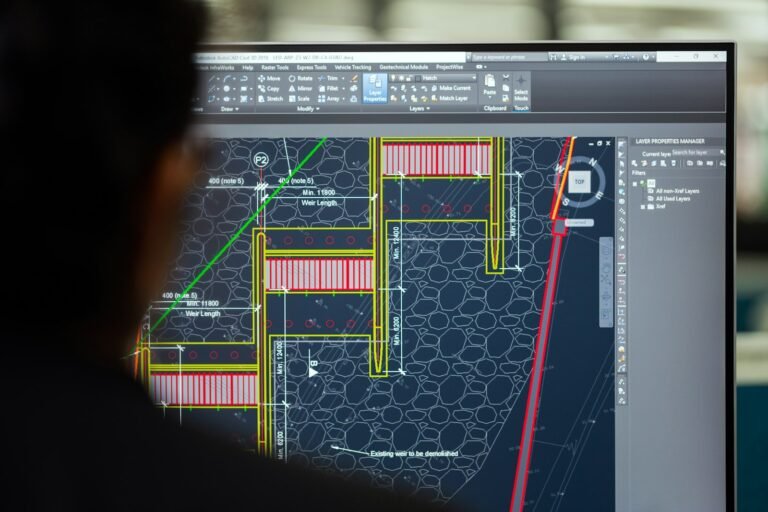
- Drawing literacy: reading title blocks, revision tables, sheet indexes and discipline codes.
- Written communication: short, exact rejection notes and transmittal descriptions.
- Consistency: doing the same check the same way, every time, even at 6 p.m. before a deadline.
What “good” looks like on a semiconductor fab project
Fab projects stress document control harder than most jobs. Design often continues while construction is under way, so revisions arrive constantly. There are many disciplines and large volumes of vendor documents for tools, utilities and safety systems. Here is what strong document control looks like on a job like that:
- One source of truth: the field never has to guess which revision is current, and the register matches the system every day.
- Fast, clean IFC issues: when an IFC package goes out, superseded sheets are marked the same day.
- RFI answers flow into drawings: every RFI that changes design is tracked until the next revision includes it.
- Vendor documents under control: equipment data, certificates and manuals are tied to the right tag numbers.
- Turnover is built early: as-built redlines, test records and O&M manuals are collected system by system, not in a panic at the end.
What’s different on Korean-affiliated projects
When the owner’s parent company is in Korea, HQ teams often review drawings and send reference documents. That creates a few specific challenges that a bilingual document controller handles well:
- Documents may arrive with Korean titles or comments that need an English title or summary for the register.
- HQ and U.S. teams may use different numbering habits, so mapping them to one project scheme matters.
- Korea is roughly half a day ahead, so documents can land overnight and need to be processed first thing.
- Reporting is frequent and formal; see my Korean work culture guide.
If you are building a bilingual career, my guide to bilingual Korean-English jobs covers other roles that use the same skills.
Career path and how to get hired
A common path is document control assistant or clerk, then document controller, then lead or senior document controller on a large project, and later document control manager or information manager across several projects. Some people move sideways into project coordination, turnover and commissioning documentation, or BIM information management.
I could not find a BLS occupation that maps cleanly to construction document control, so I am not quoting a national median here. Ask for the pay range early and compare offers with my offer comparison calculator. If the job is hourly or travel-based, check exempt vs non-exempt overtime and the construction per diem guide.
- Describe process, not just tasks. “Controlled IFC issues and superseded prior revisions across multiple disciplines” tells a hiring manager more than “filed documents.”
- Name systems honestly. List the platforms you actually used and at what level.
- Translate adjacent experience. Legal records, logistics paperwork, quality records and real estate closings all depend on version control and audit trails.
- Show language level clearly. See how to put Korean on your resume.
- Know the contract type. Many project document control roles are contract; read contract vs direct hire.
Questions to ask in the interview
- Which platform is the common data environment, and who administers it?
- Is there a written document control procedure and numbering scheme, or will I help create one?
- Will I sit at the design office or on site?
- How are vendor documents and turnover packages handled, and when does turnover start?
- How many document controllers are on the project, and who do I report to?
- Will I process documents in Korean, and is that part of the role description?
FAQ
Do I need a degree or certification to be a document controller?
Requirements vary by employer. Many postings focus on experience with document systems and construction or engineering records rather than a specific credential.
What is the difference between IFR and IFC?
IFR means issued for review and comment; nobody builds from it. IFC means issued for construction; it is the version crews use in the field.
Is document control a dead-end job?
No. On large projects it leads to lead and manager roles, and the skills transfer to project coordination, turnover and information management.
What are as-built drawings?
Drawings updated after construction to show what was actually installed, based on field redlines. They are part of the turnover package the owner receives.
How do I prepare for a document controller interview?
Be ready to walk through how you issue a revision and supersede the old one, step by step. For Korean-affiliated employers, see my Korean company interview questions.
Not legal advice. Status codes and numbering schemes vary by project; follow your project’s document control procedure. Software names are mentioned only as commonly used examples, not endorsements. Sources: ISO 19650-1:2018.
Engineering exam prep and references on Amazon
Practice reading title blocks and revision tables on real drawing sets before your interview.
- How to read construction drawings
- Construction document control book
- Excel guide for data tracking
- Construction project management handbook
- Label maker for binders and turnover sets
As an Amazon Associate, GRYNDHAUS earns from qualifying purchases.