TL;DR: An electrical engineer at an A&E firm doing power design for fabs and plants lays out how power gets from the utility to every tool: service and substations, switchgear, distribution, UPS and backup, grounding and lighting, plus short-circuit, coordination and arc-flash studies. The work is built on the NEC (NFPA 70), with arc-flash studies tied to NFPA 70E and IEEE 1584. BLS puts the median for electrical engineers at $120,630 (May 2025), and the PE license (PE Electrical and Computer: Power) is what lets you seal drawings.
I recruit for roles like this on U.S. fab and plant projects, and the electrical engineer at an A&E firm power design role is one of the openings I see most. These facilities use a lot of power and cannot afford to lose it, so owners want engineers who understand reliability, not just code minimums. The candidates who stand out can talk through a one-line diagram from the utility service down to a panel and explain why each piece is there.
Below is what the job looks like day to day, the systems you design, the studies you run, the tools teams commonly use, and the licensing path, as of late October 2026.
Electrical engineer at an A&E firm power design: what the job covers
BLS describes electrical engineers as people who design, develop and test electrical equipment and systems, including power generation and motors, and who use design software to build models and layouts. At an A&E (architecture and engineering) firm, that turns into producing the electrical design package a contractor will build from: drawings, specifications, calculations and studies.
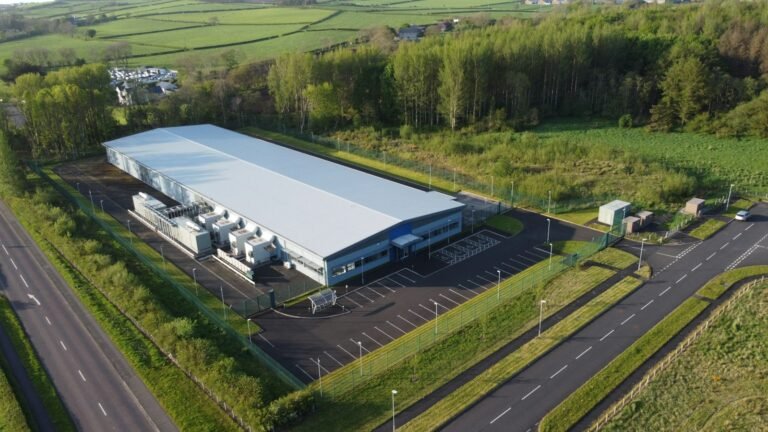
On a fab or battery plant project, the electrical team usually covers two big areas. Building power is the normal stuff: lighting, receptacles, HVAC equipment, life safety. Process power feeds production tools, process utilities and support systems, and it is where most of the load and most of the risk live.
The systems you design, from utility to tool
| System | What you design | What owners care about |
|---|---|---|
| Utility service | Service voltage and capacity, coordination with the utility, metering | Enough capacity for future phases |
| Substations | Transformers, main breakers, layout, redundancy scheme | Reliability and maintainability |
| Switchgear and distribution | Medium and low voltage gear, feeders, bus duct, panels | Room for added tools; clean maintenance paths |
| UPS and backup power | UPS systems, generators, transfer schemes for critical loads | Ride-through for sensitive processes |
| Grounding and bonding | Grounding system, equipment bonding, lightning protection coordination | Safety and sensitive equipment performance |
| Lighting | Normal and emergency lighting, controls | Code compliance and cleanroom-compatible fixtures |
| Power studies | Short circuit, protective device coordination, arc flash | Safe equipment ratings and labels |
Each system needs space, so electrical engineers also spend time in model coordination with mechanical and process teams. On dense fab projects, getting room for cable tray and bus duct can be as hard as the engineering.
Short-circuit, coordination and arc-flash studies
Power studies are where design firms add a lot of value, and they come up in nearly every interview I prep candidates for.
- Short-circuit study: calculates available fault current through the system so equipment can be rated to withstand and interrupt it.
- Protective device coordination: sets breakers and relays so the device closest to a fault trips first, keeping the rest of the plant running.
- Arc-flash study: estimates incident energy and arc-flash boundaries at equipment so the site can label gear and choose PPE.
Two references matter here. IEEE 1584-2018, the IEEE Guide for Performing Arc-Flash Hazard Calculations, provides mathematical models to determine arc-flash hazard distance and incident energy; it superseded the 2002 edition. NFPA 70E, the Standard for Electrical Safety in the Workplace, is what plants use to run their electrical safety programs, including how they use arc-flash results for PPE and work practices. I covered the worker side in my NFPA 70E arc flash training guide. As a designer, your study results feed straight into that program, along with the plant’s lockout/tagout procedures.
The NEC and which edition applies
The National Electrical Code is NFPA 70. NFPA currently sells the 2026 edition, but the edition you design to is the one the local jurisdiction has adopted. NFPA keeps NEC enforcement maps so you can check which edition is enforced in each state. On a multi-state career, it is normal to work on two editions in the same year.
One practical tip for exam takers: the PE exam uses its own fixed editions, which may be older than what your projects use. More on that below.
What the job really looks like day to day
A typical project moves through phases, and your work changes with each one:
- Load gathering: collect tool and equipment loads from the owner, process team and mechanical engineers. Expect changes.
- Concept and one-line: pick service size, substation arrangement and redundancy; draw the one-line diagram.
- Equipment sizing: size transformers, gear, feeders and UPS; reserve space in electrical rooms.
- Modeling and coordination: lay out rooms, tray and bus duct in the BIM model and resolve clashes with other trades.
- Studies: run short-circuit, coordination and arc-flash studies as equipment data firms up.
- Construction documents: finish drawings, panel schedules and specs; a licensed PE seals them where required.
- Construction support: review submittals, answer RFIs, visit the site and update studies with as-installed equipment data.
Most of the time is in the office. Site visits happen for surveys, walkdowns and construction support, so you will still need site PPE and safety orientation on active jobs.
“The unit’s SCCR is lower than the available fault current. Is that OK?”
This comes up in submittal review, and people get stuck arguing about it: packaged equipment, often HVAC units, marked with a short-circuit current rating below the fault current available where it connects.
The federal OSHA electrical rule is clear on one piece: equipment intended to interrupt current at fault levels must have an interrupting rating sufficient for the circuit voltage and the current available at its line terminals (29 CFR 1910.303(b)(4)). That section covers interrupting ratings; I couldn’t find a federal OSHA provision that sets SCCR for packaged equipment directly, so check the electrical code your jurisdiction adopted and the manufacturer’s listing. When you spot a mismatch on a submittal:
- Flag it in writing with the calculated available fault current at that point.
- Ask the vendor for a higher tested rating or a listed combination.
- Get a senior engineer’s sign-off on any fix before it goes back to the contractor.
Tools commonly used
- ETAP and SKM: commonly used for power system studies (short circuit, coordination, arc flash). Many job posts ask for one or the other.
- Revit: commonly used for electrical modeling and coordination on BIM projects.
- AutoCAD: still common for one-lines, details and existing drawings.
- Spreadsheets: load lists and panel schedules often start here.
If you only know one study tool, say so honestly and point out that the concepts transfer. Hiring managers respect that more than a long software list.
Pay and the PE Power path
From the BLS Occupational Outlook Handbook:
| BLS data | Figure |
|---|---|
| Electrical engineers, median pay (May 2025) | $120,630 |
| Electrical engineers in engineering services, median (May 2025) | $105,780 |
| Share of electrical engineers in engineering services | 22% |
| Projected growth, electrical engineers (2025–35) | 10% |
| Typical entry education | Bachelor’s degree |
“Engineering services” is the BLS industry that includes design firms, so the $105,780 figure is the closer benchmark for A&E work. Use the take-home pay calculator when you compare offers across states.
BLS notes the PE license lets engineers oversee other engineers’ work, sign off on projects and serve the public directly. NCEES says licensing boards set the rules, most states require four years of acceptable, progressive and verifiable experience, and many states offer additional paths. A typical path:
- Earn an engineering degree (an EAC/ABET-accredited program is the standard route).
- Pass the FE exam.
- Gain qualifying experience under licensed engineers.
- Pass the PE Electrical and Computer: Power exam.
- Apply to your state board, including any state-specific exam or references.
NCEES says the PE Power exam is computer-based, offered year-round at Pearson centers, has 80 questions, an 8-hour exam inside a 9-hour appointment, and a $400 exam fee paid to NCEES (boards may charge their own application fee). The exam specifications effective October 2025 list Electrical Safety (10–15 questions) and Protection (10–15) among the largest areas, and the codes provided in the exam are NFPA 70-2020, NFPA 70E-2021 and the 2017 NESC. Study the editions the exam uses, not the ones on your desk.
State rules differ. In Texas, for example, the board asks for 4 years of experience with an accredited engineering degree or 8 years with a non-accredited degree, three PE references (without exam waivers), and a Texas ethics exam. If your degree is from outside the U.S., expect a credential evaluation step. Check your own state board before you plan your timeline.
What’s different on projects for Korean companies
- Two standards worlds: owner engineers may know international practice well and ask why U.S. code requires something different. Being able to explain NEC requirements simply is a big plus.
- HQ review: one-lines and redundancy schemes may be reviewed by headquarters engineers, which adds review rounds.
- Bilingual value: Korean and English together help in design reviews and equipment vendor calls.
- Visa questions: design firms and owners differ on sponsorship. If you need it, ask early; my EB-2 NIW guide for engineers covers one long-term option.
Questions to ask in the interview
- Will I work on process power, building power, or both?
- Which study software does the team use, and who runs the studies?
- Which NEC edition are current projects designed to?
- Does the firm support the PE exam (fees, study time, PE mentors who can serve as references)?
- How often will I travel to sites during construction?
For more prep, see my list of Korean company interview questions.
FAQ
Do I need a PE to work in power design at an A&E firm?
Not to start. BLS says the FE is not required for entry-level jobs and the PE is for experienced engineers. But to seal drawings and move into lead roles, the PE matters.
Is IEEE 1584 the same as NFPA 70E?
No. IEEE 1584 gives the calculation models for arc-flash incident energy and boundaries. NFPA 70E is the workplace electrical safety standard that uses results like these for PPE and safe work practices.
Which NEC edition should I learn?
The one your projects’ jurisdictions enforce, which you can check on NFPA’s enforcement maps. For the PE exam, use the edition in the NCEES specifications (NFPA 70-2020 for the October 2025 specs).
Do I need ETAP or SKM experience?
Many posts ask for one of them. If you used a different tool, describe the studies you ran and the decisions they drove.
How much does the PE Power exam cost?
NCEES lists $400 for the exam, and your state board may charge a separate application fee.
Not legal advice; your state board’s rules decide. Software names are commonly used tools, not endorsements. Sources: BLS Occupational Outlook Handbook (Electrical and Electronics Engineers, May 2025 wage data); NCEES PE Electrical and Computer page, PE Power exam specifications (effective October 2025) and licensure page; Texas Board of Professional Engineers and Land Surveyors; IEEE SA (IEEE 1584-2018); NFPA (NFPA 70 product page and NEC enforcement maps). Accessed October 2026.
Engineering exam prep and references on Amazon
For the PE Power exam, buy the code editions NCEES lists, not the newest ones.
- NFPA 70 National Electrical Code 2026
- NEC 2020 for PE exam prep
- NFPA 70E Standard for Electrical Safety in the Workplace
- PE Electrical Power practice problems
- Power system analysis textbooks
As an Amazon Associate, GRYNDHAUS earns from qualifying purchases.