TL;DR: A fire protection engineer, semiconductor fab side, works with NFPA 318 (the fab-specific standard), NFPA 13 for sprinklers, NFPA 72 for alarms, and the International Fire Code chapter for Group H-5 fabs, which covers hazardous production materials (HPM), gas detection, workstation exhaust and an emergency control station. Most people enter with an engineering degree, add the FE exam, and later take the once-a-year PE Fire Protection exam. BLS groups fire protection engineers under health and safety engineers, with a median wage of $115,160 in May 2025.
I recruit for roles like this on U.S. fab and plant projects. A fire protection engineer for a semiconductor fab is one of the hardest seats to fill. The work mixes building code, process hazards and a lot of coordination, and very few people have done it on an actual fab. Most candidates I talk to come from commercial buildings, warehouses or insurance. They know sprinklers and alarms well but have never had to think about toxic gas, a cleanroom return air path or a chemical wet bench.
This guide explains which codes you will use, who hires for the role, what the day looks like, and how licensing works, as of late October 2026. I summarize the codes in my own words. For exact requirements, read the current editions your project has adopted.
Fire protection engineer, semiconductor fab: what the job actually covers
The BLS Occupational Outlook Handbook puts fire protection engineers inside its “health and safety engineers” profile and says fire prevention and protection engineers analyze potential fire hazards of buildings, materials and transportation systems. On a fab, that broad job gets very specific:
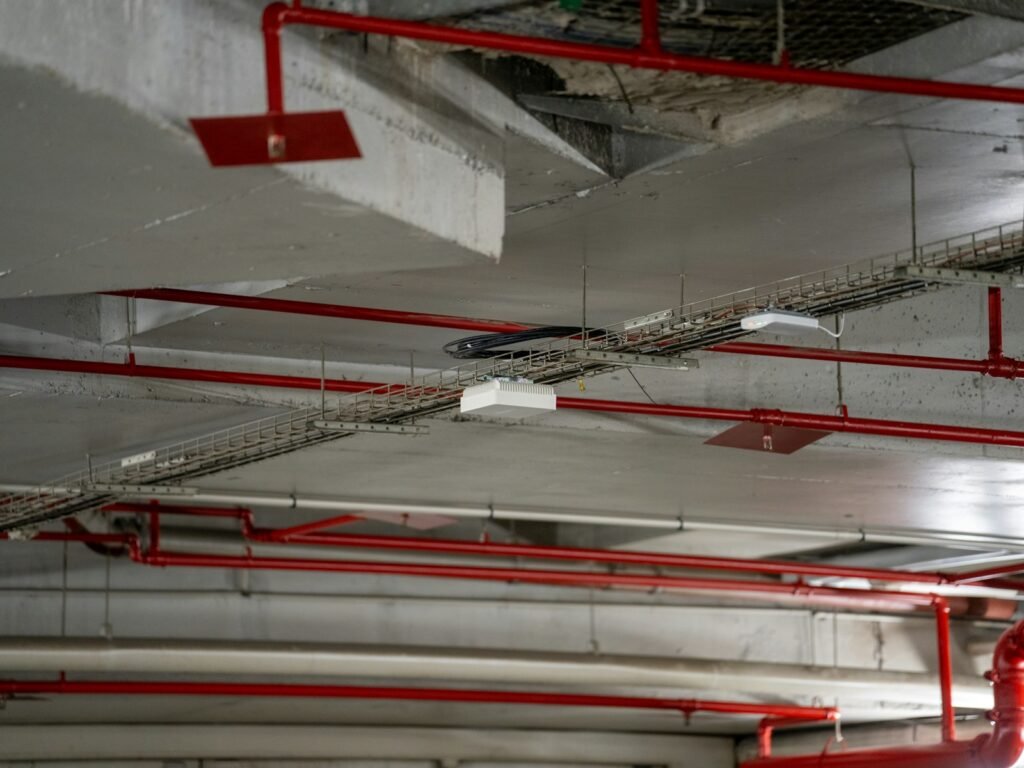
- Writing the fire protection and life safety basis of design for the fab, support buildings and chemical or gas storage areas.
- Laying out or reviewing sprinkler, standpipe and fire alarm design, often with a specialty contractor doing the shop drawings.
- Working through HPM storage and use: quantities, separation, exhaust and detection.
- Coordinating with the mechanical, exhaust, electrical and controls teams so detection, alarm and shutdown signals actually reach the right place.
- Meeting with the fire marshal or building official (the authority having jurisdiction, AHJ) and the owner’s insurer.
The professional society SFPE describes FPEs working in consulting, insurance (as risk control or loss control engineers), fire investigation, research and system manufacturing. On fab projects, I mostly see openings at A&E design firms, fire protection consulting firms, the owner’s facility engineering team, and the insurer’s loss control side.
The codes you will use on a fab
Here is a quick map. Your project’s adopted editions and local amendments decide what applies.
| Code or standard | What it covers on a fab | Edition note |
|---|---|---|
| NFPA 318, Standard for the Protection of Semiconductor Fabrication Facilities | Fab-specific fire protection: cleanrooms, HPM, gas detection, workstation and cabinet exhaust | A 2025 edition exists; the next revision cycle is aimed at 2027 |
| NFPA 13, Standard for the Installation of Sprinkler Systems | Sprinkler design and installation | 2025 edition published |
| NFPA 72, National Fire Alarm and Signaling Code | Fire alarm, detection and notification | 2025 edition published |
| International Fire Code (IFC), chapter on semiconductor fabrication facilities | Group H-5 fabs: emergency control station, gas detection for HPM gases, exhaust, emergency power, emergency alarm | States adopt different editions, for example Ohio’s rule references the 2021 IFC |
NFPA 318 in plain words
NFPA 318 is written by NFPA’s technical committee for semiconductor and related facilities. Public documents from its current revision cycle show the kind of topics it handles: a gas detection system for HPM gases, workstation exhaust that captures contaminants at the station, cabinet exhaust, cleanroom smoke detection in the return air stream, and keeping overhead automated material handling tracks from blocking sprinklers. Those details come from the committee’s first draft agenda and a 2025 tentative interim amendment, so read the full standard for the actual rules.
HPM and Group H-5 under the fire code
The IFC uses the term hazardous production material (HPM) and classifies fabs as Group H-5. One published local version, the Seattle Fire Code Chapter 27 (based on the 2018 IFC with local amendments), shows the structure well:
- The chapter applies to semiconductor fabrication facilities and comparable R and D areas classified as Group H-5.
- An emergency control station must sit outside the fabrication area and be staffed by trained people.
- A gas detection system is required for HPM gases, and alarms must signal the emergency control station.
- For combustible workstations, a sprinkler is required inside each branch exhaust connection. Wet benches are a common example of a workstation where this comes up.
- Emergency power must supply listed systems, including HPM exhaust ventilation and gas detection.
Section numbers and details change between editions and states, so always check your jurisdiction’s adopted version.
What the job really looks like day to day
From what hiring managers tell me, a normal week on a fab design team is less “calculate a sprinkler system” and more “keep every other discipline from breaking the fire strategy.” A typical week might include:
- Design reviews: checking that the exhaust, gas and chemical teams’ changes still match the fire protection basis of design.
- Code analysis updates: tracking HPM quantities per control area as the tool list grows.
- Cause-and-effect matrices: agreeing which detector triggers which alarm, shutdown or exhaust response, together with the controls engineer.
- RFIs and submittals: answering contractor questions and reviewing sprinkler and alarm shop drawings.
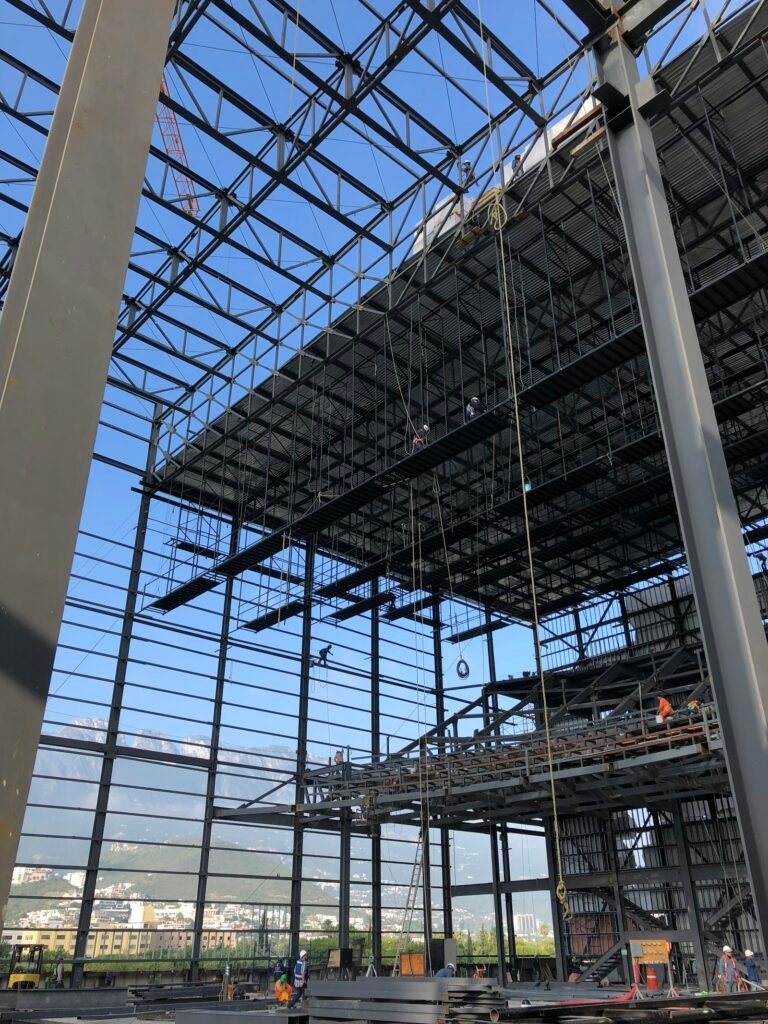
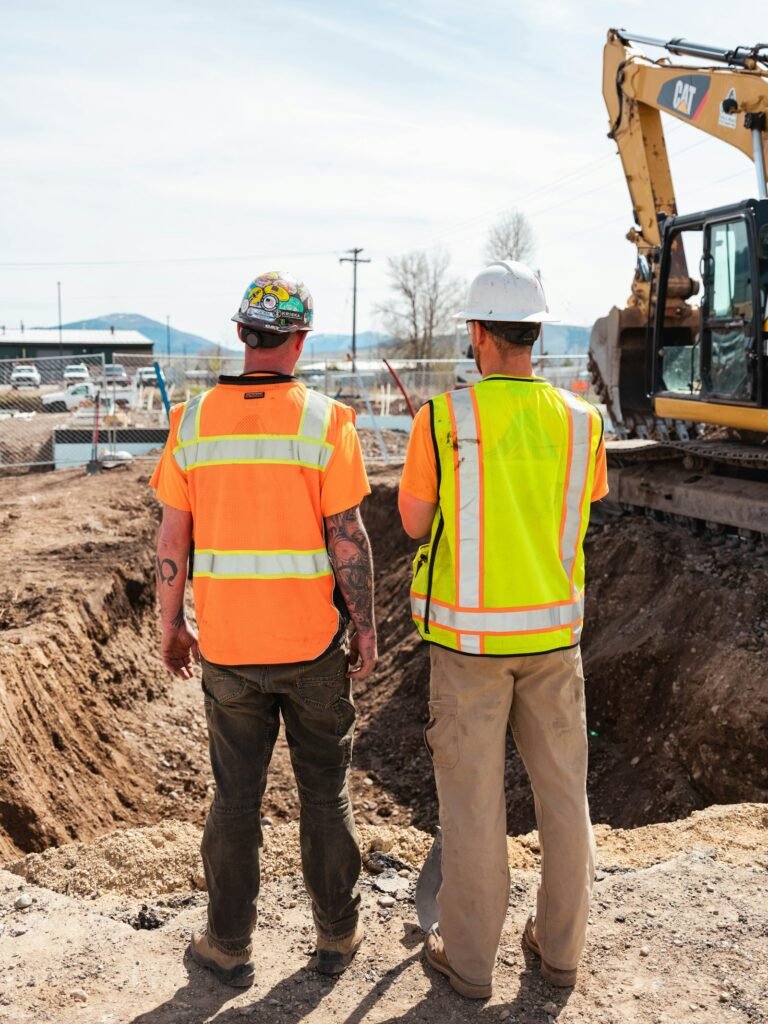
- Site walks: checking installed work against drawings, which means hard hat, glasses and boots on an active construction site.
- AHJ and insurer meetings: presenting the approach and tracking comments to closure.
If you have done the electrical side of fab work, you will see overlap with arc flash and lockout rules during testing. My guides to NFPA 70E arc flash training and lockout/tagout cover that part.
Licensing: FE, then PE Fire Protection
BLS says licensure is not required for entry-level health and safety engineer jobs, but some states require fire protection engineers to have a license. In practice, a design firm needs a licensed engineer to seal fire protection drawings, so the PE becomes important as you move up. Here is the usual path:
- Earn an engineering degree. Fire protection engineering degrees exist, but many FPEs studied mechanical, civil or chemical engineering.
- Pass the FE exam. NCEES offers it year-round on computer at Pearson centers: 110 questions, a 6-hour appointment, and a $225 fee paid to NCEES.
- Get qualifying experience. Texas, for example, asks for at least 4 years of engineering practice with an accredited degree and 3 references from licensed PEs (TBPELS).
- Book the PE Fire Protection exam early. It is offered once a year as a single-day event; the next date is April 13, 2027. It has 85 questions in a 9.5-hour appointment and costs $400 paid to NCEES (NCEES PE Fire Protection).
- Apply to your state board. Board fees differ: Texas lists a $75 PE application fee (TBPELS fees), New York lists $377 for licensure and first registration (NYSED), and Arizona’s packet lists $325 for application and initial registration (Arizona BTR). Texas also requires its own ethics exam.
The exam specification effective April 2027 covers fire protection analysis, fire science, smoke control, fire alarm and signaling, water-based systems, special hazard systems, passive and structural fire protection, and human behavior and evacuation. Because the exam is only offered once a year, missing the window costs you a full year, so plan around it.
For calculators, the NCEES calculator policy allows Casio fx-115 and fx-991 models, the HP 33s and HP 35s, and TI-30X and TI-36X models.
Should I wait for the new PE Fire spec?
With a new spec announced for April 2027, a lot of fire protection engineers freeze and wonder whether to hold off until the new material settles.
Here’s what NCEES itself says. The PE Fire Protection exam is offered once a year, and the next date listed is April 13, 2027, so waiting one cycle costs a full year. The exam has 85 questions, and the 2027 specifications put the largest share on water-based systems (12 to 18 questions). Each state sets its own rules, so the state board makes the final call. Check your board’s application deadline before you pick a study start date.
NICET certifications for fire protection technicians
Not everyone on the fire protection team is a PE. Designers, layout technicians and inspectors often hold NICET certification. NICET’s fire protection programs include Fire Alarm Systems, Inspection and Testing of Fire Alarm Systems, Inspection and Testing of Water-Based Systems, Special Hazards Systems, and Water-Based Systems Layout.
Levels build on each other. For example, in Inspection and Testing of Water-Based Systems, Level I needs at least 6 months of relevant experience, Level II at least 2 years, and Level III at least 5 years plus a recommendation, along with exams and supervisor-verified performance measures. If you are a technician aiming at engineering later, NICET is a strong bridge, but it is not a PE license.
Pay and job outlook
BLS does not publish a separate wage for fire protection engineers. For the health and safety engineers group, it reports:
- Median annual wage: $115,160 in May 2025.
- About 22,300 jobs in 2025, with employment projected to grow 5 percent from 2025 to 2035.
- Top employers include manufacturing, government, engineering services and construction.
Source: BLS OOH, Health and Safety Engineers. Fab project offers often add per diem or relocation, so compare the full package. The offer comparison calculator helps, and my salary negotiation guide covers how to ask.
What’s different on projects for Korean-affiliated owners
- Two code worlds: the owner’s HQ team may bring design standards from home. Your job is to show where U.S. codes and the AHJ require something different, clearly and early.
- Bilingual review: drawings, specs and meeting notes sometimes move between English and Korean. Bilingual engineers get pulled into these meetings a lot, which is real visibility.
- Schedule pressure: fab schedules are tight, and the fire strategy often must keep pace with tool layout changes. Ask about expected overtime up front.
- Reporting lines: you may report to a U.S. design manager but answer questions from the owner’s HQ engineers. Clarify who approves design decisions.
For background on the wider safety team on these sites, see safety jobs at Korean battery and chip plants.
Questions to ask in the interview
- Which edition of the IFC, NFPA 13, NFPA 72 and NFPA 318 has the project adopted?
- Who is the engineer of record for fire protection, and will I work under a PE who can sign my experience record?
- Is the sprinkler and alarm design done in-house or by a design-build contractor?
- Who owns the cause-and-effect matrix for gas detection and shutdowns?
- How much time is on site versus in the office, and is travel or per diem included?
- Will the company pay for the PE exam and NFPA standards?
Before signing, run through my offer letter checklist.
FAQ
Do I need a fire protection engineering degree?
No. BLS says health and safety engineers typically need a bachelor’s degree in engineering or a related field. Many FPEs come from mechanical or civil programs and learn fire protection on the job.
How often is the PE Fire Protection exam offered?
Once a year. NCEES lists the next date as April 13, 2027, and new exam specifications apply from April 2027.
Is NFPA 318 the only standard for fabs?
No. NFPA 318 works alongside the adopted fire and building codes, NFPA 13, NFPA 72 and others. The AHJ decides which editions apply.
Can a NICET-certified technician become an FPE?
NICET shows strong system knowledge, but a PE license follows your state board’s degree, exam and experience rules. Check your board before planning the switch.
My degree is from outside the U.S. Can I still get licensed?
Often yes, but boards usually want a credentials evaluation. Texas has a page for international applicants. If you also need a visa path, see my EB-2 NIW guide for engineers.
Not legal advice; your state board’s rules decide. Codes summarized, not quoted; check your adopted editions. Sources: BLS OOH Health and Safety Engineers (May 2025 wages); NCEES FE, PE Fire Protection and exams pages; NCEES PE Fire Protection 2027 specifications; NICET certification programs; SFPE; NFPA 318 documents; Seattle Fire Code Chapter 27 (2018); Ohio Adm. Code 1301:7-7-27; TBPELS; NYSED; Arizona BTR. Checked October 2026.
Engineering exam prep and references on Amazon
Buy the NFPA editions your project has adopted, not just the newest ones.
- NFPA 13 handbook
- NFPA 72 handbook
- SFPE Handbook of Fire Protection Engineering
- PE Fire Protection practice problems
- TI-36X Pro calculator
As an Amazon Associate, GRYNDHAUS earns from qualifying purchases.